How to Safely Ride Two-Up on a Motorcycle

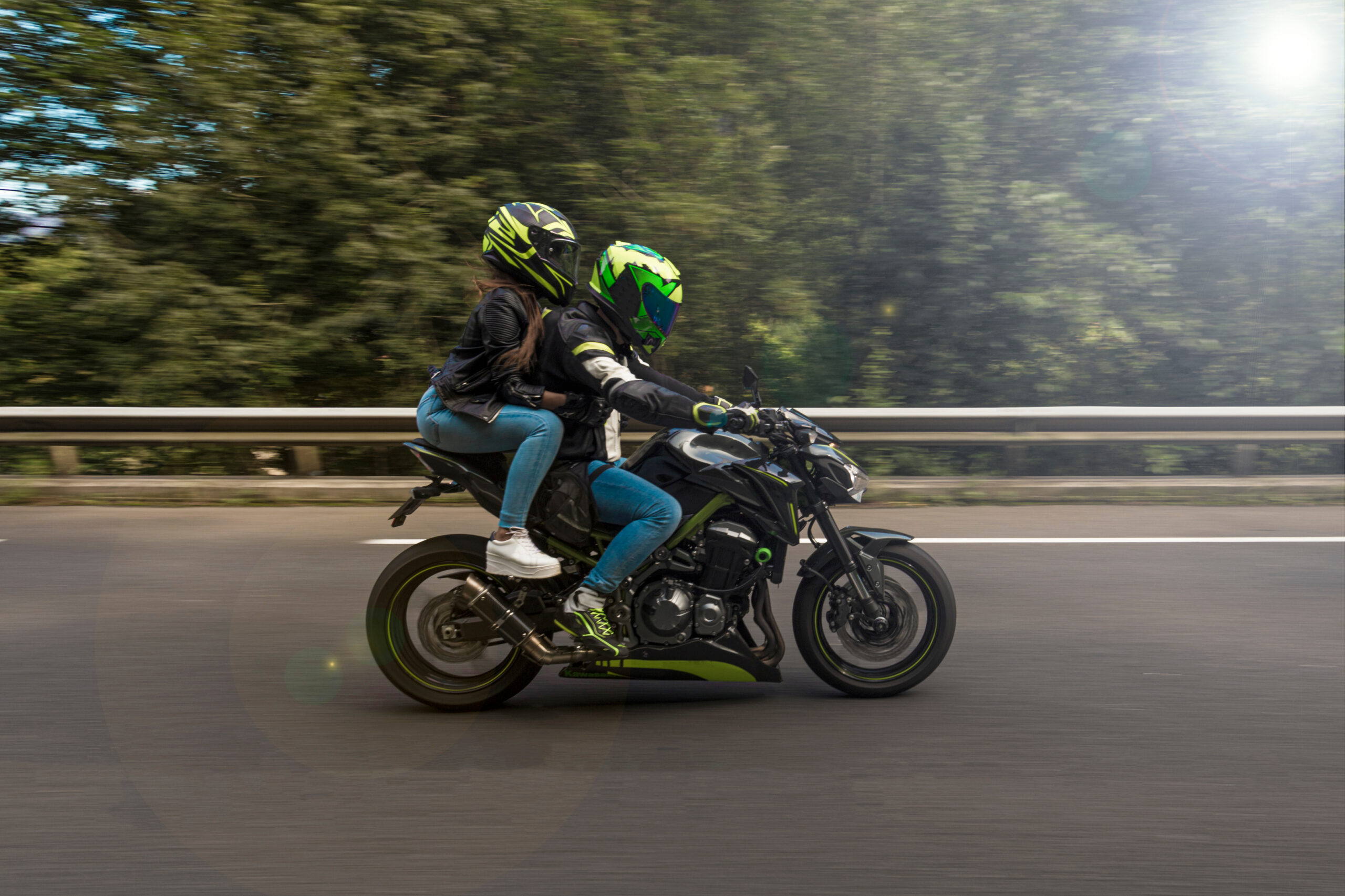
A passenger changes how your bike stops, turns, and balances. Safe two-up riding comes down to three things: a bike set up for two, a passenger who knows what to do, and smoother habits from you. Carolina roads are made for riding, so it pays to get all three right.
At Karney Clayton, the Carolinas’ Biker Lawyers, we love to ride. We have spent over 50 years helping injured riders as a Charlotte motorcycle attorney team, so we know how much a little prep matters and how to get ready before you take a passenger along.
Know the Rules Before You Ride Two-Up
Your bike must be built to carry a passenger. Under North Carolina motorcycle safety laws, you cannot carry more people than your bike was designed to hold. You and every passenger must also wear a helmet that meets federal safety standards, with the strap secured.
Age is the next question. According to the UNC School of Government, North Carolina law does not set a minimum age for motorcycle passengers. That does not mean every child is ready to ride. Your passenger should be able to reach the footrests, hold on, and follow your instructions.
Set Up Your Bike for Two
Start with your owner’s manual. It may list weight limits and setup tips for carrying a passenger, and your suspension or tire pressure may need an adjustment. Your bike also needs a passenger seat and footrests.
Extra weight can change braking, cornering, and starting from a stop. Take a few laps in an empty parking lot with your passenger on board before you hit the road. Practice slow-speed clutch and throttle control and a few easy stops. If you are new to riding, a motorcycle safety course can help you build skills before you carry anyone.
Brief Your Passenger Before You Roll Out
Your passenger has a job too. Go over the following basics together before you leave:
- Hold the rider’s waist or hips, or the hand-holds if the bike has them.
- Keep both feet on the footrests, even at stops, and keep your legs away from the muffler.
- Move as little as possible and avoid sudden weight shifts.
- Look over the rider’s shoulder in the direction of a turn.
- Tell the rider before you get on or off, and wait until the bike is running, upright, and off the stand.
Gear matters, too. Your passenger needs the same protection you wear, including a helmet, jacket, gloves, riding pants, and boots. A two-minute talk like this may help prevent a tip-over before you even leave the driveway.
Ride Smoother With a Passenger
Once you are rolling, small changes in how you ride can make a big difference. Two people on one bike need more room and more patience.
Brake Early and Leave More Room
Start slowing sooner than you normally would, and brake smoothly. Passing takes more time and space with extra weight on board, so wait for a bigger gap. Give your passenger time to get used to the speed and the feeling of leaning in curves.
Talk With Your Passenger
Limit chatter while you ride, but agree on a few simple signals before you go. A tap on the shoulder could mean “slow down” or “I need a break.” Our guide to motorcycle hand signals is a good place to start.
What to Do if Something Goes Wrong
Even careful riders can get hit by a distracted or careless driver. If a crash happens, get medical help for you and your passenger first. When you are able, take photos, get contact details from witnesses and drivers, and keep your records in one place. Our motorcycle accident checklist walks you through each step.
Your passenger may have their own options if they were hurt. Our attorneys can look at the facts and explain where each of you stands. It helps to call sooner rather than later, because evidence can fade fast.
Contact Karney | Clayton After a Motorcycle Crash
Two-up rides should end with good stories, not hospital bills. If a crash does happen, Karney | Clayton is here for you and your passenger. For over 50 years, the Carolinas’ Biker Lawyers have helped injured riders, and we handle motorcycle and serious automobile accidents. We work to help you pursue payment for medical bills, lost income, and pain and suffering.
Our team includes Sean Clayton, a member of The National Trial Lawyers Top 40 Under 40 and a Super Lawyers Rising Star. We ride, we listen, and we know what bikers face on the road and in the courtroom. Tell us what happened and contact our team to schedule a free case evaluation.